 Reviews

 Proudly American

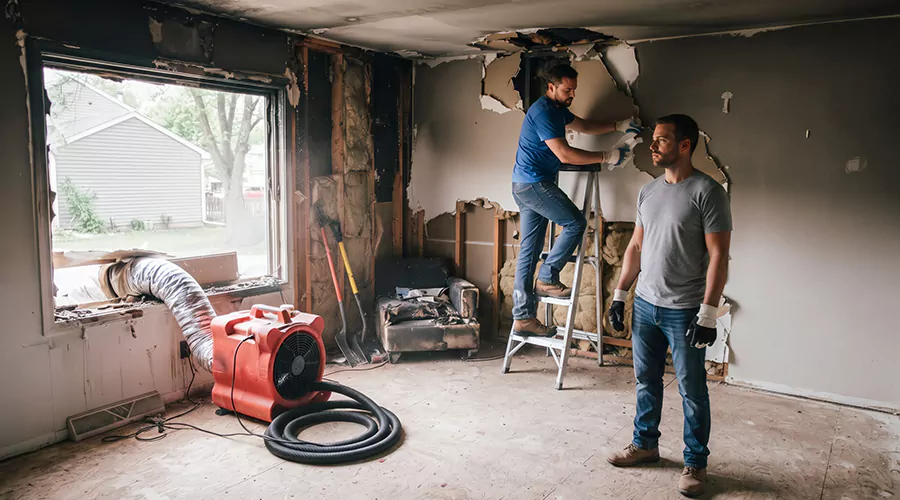
Fire remediation is the cleanup and stabilization work used to address smoke residue after a fire. The process can also deal with soot or firefighting water. It is needed when fire effects extend beyond a small surface stain or when building materials cannot be cleaned with basic household methods.
The term overlaps with restoration. Remediation usually focuses on contamination control and damage stabilization. Later repairs can continue into rebuilding damaged finishes.
What Does the Remediation Process Include?
Post-fire cleanup addresses conditions that remain after the flames are out. The exact scope depends on where smoke traveled and whether water entered the structure. The current ANSI/IICRC S700 standard covers assessment of fire residues and odors in buildings, while mold remediation may also be needed when moisture from firefighting or water damage creates conditions for mold growth. It also covers affected building systems.
A typical plan can include:
- Inspecting fire and smoke impact
- Securing damaged openings
- Removing standing firefighting water
- Drying wet building materials
- Removing loose soot and debris
- Cleaning affected surfaces
- Managing persistent smoke odor
- Removing materials that cannot be saved
- Checking HVAC areas for smoke impact
Fire damage clean up should follow an ordered process because wet materials can complicate later cleaning.
How Is Remediation Different From Restoration?
Remediation focuses mainly on removing contamination and stabilizing the affected property. Restoration is broader and can include those same steps plus repair work. The terms are sometimes used interchangeably. For that reason, the scope listed in an estimate matters more than the label.
| Work Stage | Remediation | Later Restoration |
|---|---|---|
| Damage assessment | Yes | Sometimes |
| Soot removal | Yes | Usually completed earlier |
| Water drying | Yes | Usually completed earlier |
| Odor treatment | Yes | May continue |
| Drywall replacement | Limited | Often |
| Structural rebuilding | Usually no | Yes |
For example, cleaning soot from a kitchen wall is remediation work. Replacing burned cabinets after cleaning falls into the repair side of fire damage restoration.
Fire restoration can therefore continue after contamination has been removed.
When Is Fire Remediation Needed?
This cleanup is needed when smoke or soot remains after a fire. It is also needed when suppression water affects building materials. Visible flame damage is not required because smoke can move into nearby rooms that never burned.
Common warning signs include:
- Soot appears on walls or ceilings.
- Smoke odor returns after ventilation.
- Residue is visible around air registers.
- Firefighting water soaked flooring.
- Drywall became wet or stained.
- Insulation holds smoke odor.
- Cabinets contain oily residue.
- Several rooms smell smoky.
- Surfaces transfer black residue.
- Burned materials remain inside the property.
Smoke remediation becomes more important when odor continues after basic cleaning because the source may be inside porous material.
Why Do Smoke and Soot Need Separate Attention?
Smoke can travel far beyond the burn area while soot settles on accessible surfaces. The residue type can also affect the cleaning method. Some soot smears when cleaned incorrectly and can become harder to remove.
Fire damage cleaning should begin by identifying where residue is present before wet washing starts. Loose dry soot is often removed first. Persistent odor should be addressed after source residue has been cleaned rather than covered with fragrance.
Soot damage around vents can indicate that smoke reached the HVAC system. The IICRC S700 standard includes fire residues affecting building systems within its scope.
What Happens to Water Used to Put Out the Fire?
Firefighting water creates a separate moisture problem because it can soak drywall or flooring. Standing water should be removed first. Wet materials are then dried or taken out when they cannot safely remain.
A common sequence is:
- Remove standing water.
- Expose wet materials when needed.
- Dry salvageable materials.
- Confirm moisture has fallen.
- Continue smoke and soot cleanup.
- Begin repairs after drying.
The Red Cross advises getting guidance on drywall and insulation soaked by fire-hose water because severe saturation can affect whether those materials can remain.
What Can You Safely Check Yourself?
A simple residue test can help show how far smoke contamination extends across accessible hard surfaces. Use a clean white cloth and lightly wipe a small area that appears clean. Do not rub delicate finishes or disturb charred materials.
Check locations such as:
- A wall outside the fire room
- The top of a door frame
- A cabinet exterior
- An accessible air-register cover
Gray or black transfer means residue remains on that surface. A clean cloth does not prove that hidden cavities are unaffected.
When Should You Call a Professional?
Professional assessment is appropriate when smoke affects several rooms or structural materials were burned. Help is also appropriate when electrical systems were exposed or firefighting water entered walls. Persistent odor after reasonable cleaning is another trigger.
Professional fire and smoke restoration becomes more relevant when:
- Structural framing is charred.
- Electrical components were exposed.
- Heavy soot covers large areas.
- HVAC contamination is suspected.
- Firefighting water soaked wall cavities.
- Odor keeps returning after cleaning.
- The property contains unstable materials.
- The cleanup boundary is unclear.
The ANSI/IICRC S700 standard addresses assessment and restoration cleaning for fire and smoke damage. Its first edition was published in 2025.
How Can Further Damage Be Limited After a Fire?
Further damage can be limited by keeping soot from spreading and dealing with moisture promptly. Avoid unnecessary traffic through contaminated rooms. Do not cover dirty surfaces with paint before residue has been removed.
Useful steps include:
- Keep affected rooms isolated when practical.
- Avoid touching loose soot.
- Photograph damage before cleanup.
- Remove standing water when conditions are safe.
- Keep smoky belongings away from clean rooms.
- Check HVAC filters after smoke exposure.
- Wait until walls are clean and dry before refinishing.
Fire damage removal should focus first on material that cannot be cleaned or safely retained.
Conclusion
Post-fire recovery should remove smoke residue before damaged areas are rebuilt. Moisture from suppression efforts also needs attention before new finishes are installed. Fire remediation is most useful when contamination extends beyond a small surface area or hidden materials are affected. If structural damage or electrical exposure is present, professional assessment can define the safe scope. Start by documenting damage and keeping affected areas isolated.
Frequently Asked Questions
Is remediation the same as restoration?
The terms overlap. Remediation emphasizes cleanup and contamination control while restoration can continue through rebuilding.
Does every small fire require remediation?
No. A very small event may need only limited cleaning if residue did not spread and building materials stayed undamaged.
Can smoke odor remain after soot is cleaned?
Yes. Smoke odor can remain inside porous materials or hidden areas even after visible residue is gone.
Does remediation include water damage?
It can. Water used during firefighting often needs extraction and drying before repair work continues.
How long does the cleanup process take?
Small smoke losses may take days. Multi-room contamination or wet structural materials can extend the work into several weeks.
Can fire-damaged materials always be cleaned?
No. Charred or deeply contaminated materials may need removal instead of cleaning.